Update as of 5/20: My contact at the NCDAH checked the Adjutant General’s “Roll of Honor” and did not find John W. Venable listed. This was a list (in no way complete) of soldiers serving in NC regiments compiled between 1862 and 1863 or ’64.
Update as of 5/19: So here is where we stand. First time John Venable is listed in the census he is a free black in his dad’s household – Jeff (which I take it is Jefferson) Venable who is a blacksmith in 1850 and again in 1860 in Surry County. in 1870, John is listed as head of household and a farmer – his brother is a blacksmith however and they are in Yadkin County. Ten years later John is listed as head and a blacksmith and living in Yadkin. Being in Yadkin explains the affidavit from Sawyer who was in Yadkin (explains as in makes sense geographically).
We still have a number of questions that need to be answered. How do we reconcile the clerk’s statement – no law for this – with the Sawyer affidavit? My contact at the NCDAH has this to say:
On the one hand the Clerk was obviously wrong in that John Venable, as far as we can track him, is free and not enslaved. But lets look at the clerk – C M McKaughan in 1920 he is 42 – so born after slavery. He may have no concept of what a free black man was. It’s weak but nonetheless plausible, I think. It might be his only defense – born in a post-slave world, of age at Jim Crow, does he know of such a thing as a free black. Thus when confronted with a colored woman applying for a pension he thinks “slave” and dismisses the application. I think it says nothing one way or the other about service – only about what the clerk knew or understood of days before his birth.
Sawyers statement is problematic as well in that we can not substantiate the claim. The problem is that no records exist that list a John Venable, mullato, as a soldier. Moore’s Roster includes no listing. So, what can we reasonably conclude at this point? For one thing, the clerk is obviously wrong. The man John Venable (middle initial is H) who has a wife Sarah is a mulatto and is a free person of color in 1850 and 1860. Sawyers’ statement stands alone and can not be substantiated, which means that we cannot conclude based on the available evidence that John Venable was a black Confederate soldier.
Let me be clear that I am not saying once and for all that John Venable was not a black Confederate soldier, just that the available evidence does not permit us to draw that conclusion. Perhaps Mr. Ijames has additional documentation in this case. If so, I urge him to bring it to our attention. Unfortunately, this is how many of these cases end up. Primary sources are collected and a conclusion is drawn without corroborating it with other evidence and without giving attention to the obvious, that documents must be interpreted carefully and that often there is more than one legitimate interpretation. This should be a lesson to all of us.
————-
In one of his comments Earl Ijames referenced the name of Pvt. John Venable of the 21st Regiment NCST, Co. H as evidence of a legitimate black Confederate soldier. There was no explanation attached except for the following: “Colored. Enlisted on June 5, 1861.” Without any additional information it was impossible for me to respond or take part in the kind of discussion that serious historians ought to entertain – until now. If Mr. Ijames is unable or unwilling to bring about that kind of discourse than I will with a little help from my friends in the North Carolina Department of Archives and History. I now have four documents related to Venable’s status in the Confederate army and quite a number of questions.
The documents include John Venable’s widow’s pension application. Unfortunately, I could not upload the second page of the pension application, but it does say, “disallowed no law for this” at the bottom. The 1927 pension law that included former slaves made no provisions for their widows. The second document refers to him as a “good soldier” and the last document refers to Sarah as the “widow of a slave.” According to my contact, John W. Venable shows up on the 1880 census in Surry County NC. The census indicates that he was living with his wife Sarah, a daughter, and his occupation is listed as blacksmith. Venable could not be found in NC in the 1870 census and there appears to be no death certificate.
The published troop roster for 21st Regiment NCST, Co. H., lists a John W. Venable (no rank) and says this about his service: “Colored. Enlisted on June 5, 1861. No further records.” In compiling the roster for that company, the editors did consult some muster rolls. My contact spoke to one of the current editors (he was not around when they did the 21st Reg. volume) who suggested that if Venable had been found on one of the muster rolls, his entry in the published book would have indicated him present on that date. There is a John Sawyers listed in 21st Regiment NCST, Co. H in the published roster, likely the fellow who provided the affidavit.
Here is where it gets very interesting. There is no Compiled Service Record for John W. Venable on the NARA microfilm. In addition, there are two other Venables listed in the published roster for Co. H. (A common name in that part of NC and the adjoining area of VA). My contact found them on the 1860 census, both of their families seemed to be on small farms. The next move will be to look at the slave census and see if either of them had slaves.
This is why we have an obligation to ask questions and those who make claims have an obligation to back them up – nothing more, nothing less. I don’t know whether this man was a soldier since we now have too many unanswered questions given the frequency of the name in the unit and the fact that there is no service record for John W. Venable. As soon as I hear something more I will pass it on.
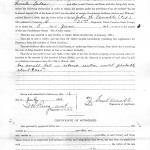
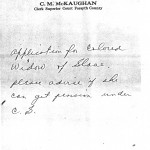
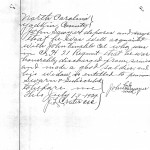
John Venable was actually married to Solomon’s daughter
I found Solomon Sawyer’s Confederate Card…. http://prntscr.com/beqxm2
NC Company H
There were MANY Free People of Color in Surry County NC who were considered more Indian than Black. Some of their races change to White over time, so you really can’t say if someone was TRUELY Black or White. These people were my ancestors as well, and Solomon Sawyer and other FPOC there were VERY close to White. You will find most of their names among the Guion Miller apps with a wealth of information on their backgrounds………… Evans, Hill, Stewart, Goins, Carter, Ceasar, Donathan, Barber, etc….. Paul Heinegg didn’t research that region of the country(Surry, Stokes, Yadkin,, Forsyth, Rockingham) where MANY Free Blacks quietly slipped into Whiteness before the Civil War.
Forgive my response to this 6 month old conversation. I am curious though, is there precedent for Free men of color in the Confederacy being pressed into service prior to the conscription act? The amateur historian is really curious.
Cheers,
Scott
Absolutely, Scott. I highly recommend reading Stephanie McCurry’s new book, _Confederate Reckoning_ (Harvard University Press) on this particular topic.
“History of the State of Kansas”, Author William G. Cutler, published in 1883.
BIOGRAPHICAL SKETCHES
” SOLOMON SAWYER, confectioner, came to Kansas in December, 1868. Commenced present business in June, 1879. Was born in Surrey Co., N.C., July 1, 1840. Was pressed into the service of the Confederate army in 1861, and was compelled to work for the Southern cause in various ways for over three years, but finally made his escape to his native county, and remained concealed until the surrender of Gen. Lee. Came North in 1866, and went to Ohio where he remained until 1868, when he came to Kansas. Was married in June, 1869, at Topeka, to Mrs. Jane Woods, who died about five years ago. Was married again June 13, 1882, to Miss Sarah Mitchell, of Topeka.”
Bob,
Thanks for the information, but you are going to need a wartime source. Is this man listed as a solider on a muster roll? Is there a way to check the source used for this postwar sketch? This is not sufficient evidence.
GOIN, James. PCDR, October 1, 1861.
GOIN, Perrin. Company K, 50th Virginia Infantry. KIA, Gettysburg.
GOINGS, Leroy. Company H, 51st Virginia Infantry. Company H, 23rd
Battalion Virginia Infantry. POW.
GOINS (GOINGS), Ewell. Company K, 50th Virginia Infantry. CPA.
GOINS, Lee. Company D, 6th Virginia Infantry.
GOINS, Morgan. Company E, 53rd Regiment North Carolina Infantry.
Born in Patrick County in 1842. Living in Surry County, North
Carolina when he enlisted in the Army. Went North and took oath of
allegiance to United States in April 1864.
GOINS, William Harden (1831-1864). Company E, 53rd Regiment
North Carolina Infantry. Born in Patrick County but enlisted in Surry
County, North Carolina in 1862. Died in January 28, 1864.
ALL SUSPECTS
http://www.freestateofpatrick.com/civilwarconfederatesoldiers.pdf
No less than 50 of these soldiers, I’d bet the farm on that. Coming from a LONG line of FPOC and knowing the region the way that I do, I can guarantee you that. You should also look into how many Lumbee and Tuscarora fought also. These people manipulated the race factor and intermarried with people who were Black, but closer to White with every generation. I could share some photos of my ancestors and kin that would cause you to question the whole racial identification system in America. You should also look into Walter Plecker’s List where he identified many mixed race families trying to pass as White in 1940. You’ll find some of their ancestors fighting with the Confederacy no doubt. It was the drive of these people to be White that makes me fairly certain that you’ll find many needles in the haystack. Goins has been proven by dna to have been Black, and not Indian as they claimed. Them along with thousands of others were passing. What better way to show your willingness to the White community than to fight for the Confederacy.
Yes, I am aware of these men. No doubt, some did pass as white, but that is a crucial point within this broader debate about about the myth of the black Confederate soldiers. There are plenty of stories of men who attempted to pass and were forced out once they were discovered. Thanks.
Name:George Donathan,
Age in 1860:17
Birth Year:abt 1843
Birthplace:North Carolina
Home in 1860:Siloam, Surry, North Carolina
Race:Mulatto (counted as a person of color- the whole family is-free or would be enumerated on the slave schedule)
Gender:Male
Post Office:Siloam
Value of real estate:View image
Household Members:
Name Age
Nancy Donathan 70 (George’s Grandmother)
Larkin Donathan 52
Sarah Donathan 47 (? as Lavina was in “poor house” institution)
Bill Donathan 45 (may be his uncle as, lived nearby Uncles’ wife was Mary)
Jas Donathan 40
Betsy Donathan 12
Frank Donathan 10
Francis Donathan 6
Theophilus Donathan 16
Pop Donathan 14
George Donathan 17
DONATHAN, George. Company H, 51st Virginia Infantry
Suspect if he leads back to….. http://prntscr.com/7mvfld
DISON, John. Company B, 2nd North Carolina Cavalry……… http://prntscr.com/7mvhiw
The Harris, Haynes, Hiatt, Freeman, Holley, Mitchell, Mills, Penn, Perkins, Price, Richardson and TOO many more to name. There is no doubt in my mind, and this is just in my particular region. The fact that the state of Va. sent the bulk of the Confed. soldiers should give you some inkling as to the possibilities here. Va. coincidentally home of the largest FPOC communities in all of the colonies except for maybe Maryland. You can find nearly ALL of these names in Paul Heinegg’s Free African Americans of NC and Va.
I’ve been digging more into the now White Donathan family a little more this morning. I found a few of his descendants on the 23andme DNA website, and they were definitely Mulatto and not Native descended. Therein lies the problem. I’ve been looking at dna results of many so called “Native Americans” from the region, and the majority have no Indian blood in spite of tribal enrollments. The same goes for many Va. Indians whom it seems many were more Black than Indian, but of course now they are probably about 95% White. I saw one Lumbee result that was 24% Black and 2% Native American. That’s an Oxendine with a Locklear mother.
http://prntscr.com/7n6oj5
http://llggenealogysite.com/getperson.php?personID=I1429&tree=lovegrover
I am familiar with the family mentioned here. George Donithan’s descendants (2nd link) are a very bad test case for determining the Donithan family ancestry. He married a woman who had several illegitimate children who were “legitimized” when George married her and the children subsequently took his name. So, they are “Donithans” in name only. DNA results from Donithans of this line therefore do not correspond to George’s family.
VIEW 1850 United States Federal Census
View blank form
View/Add alternate info
Report issue
Name: Elijah Donathan
[Elijah Donithan]
Age: 26
Birth Year: abt 1824
Birthplace: North Carolina
Home in 1850: South Division, Surry, North Carolina, USA
Gender: Male
Family Number: 668
Household Members:
Name Age
Elijah Donathan 26
Hannah Donathan 33
Benjamin F Donathan 8
Jacob Donathan 5
Genl Gains 2
Martha E Gains 1
SAVE Cancel
Name: Elijah Donathan
Birth Date: abt 1818
Age: 44
Enlistment Date: 1862
Military Unit: Thirty-eighth Infantry
Mr. Giles, Were they musicians or were they listed in another way on the muster rolls?
Robert Moore @ Cenantua’s Blog
Mr. Giles,
Interesting. What documentation do you have to show that two free blacks were “forced into service” with the 21st?
Thanks for sharing.
John and Solomon Sawyers who are mentioned in this thread, were my ancestors. They were also free born African Americans to who were forced into service with Company H of the 21st Confederate Regiment.
The witness, John Sawyer, appears in the National Archives Compiled Service Records as “John Sawyers.” He enlisted as Private in Company H on June 5, 1861.
Strangely, he does not appear on any of the existing muster rolls for Company H on file at the NA. The information for Sawyers is from a roll compiled by the Adjutant General of North Carolina. The roll was made out ca. 1863. It was borrowed by the NA after the war.
The service record next to John Sawyers is Solomon Sawyers (same company/same enlistment date). His record is also based on the Adjutant General’s roll and does not appear on any muster rolls.
To me it looks like there was some mixup on who and what comprised Company H of the 21st Regiment.
Thanks for the additional information.
Rhapsody,
I can easily imagine a slaveholder giving a slave a gun during the war. As historians, however, we don’t live in the world imagination. We would have to explain the decision given that the extent to which white southerners worked to prevent violent slave uprisings throughout the antebellum period and especially in the wake of Nat Turner’s Rebellion.
Larry,
It’s exactly what is needed when discussing this issue. I admit that I am not sure whether this guy served as a legitimate Confederate soldiers. All we have is the evidence and our ability to interpret. I have no clue how Ijames interprets the documents in his possession since all he did was throw a name at me as if that alone is sufficient. What I do know is that at this point the evidence is not conclusive. And that is the problem with most of the examples that I’ve come across. Someone throws out a newspaper article, image, pension file, etc. and draws a conclusion w/o spending any time thinking about alternative interpretations. It shows laziness, dishonesty, and a failure to understand the historical process.
As I’ve said before, I have no doubt that a few free blacks served as soldiers in Confederate ranks; however, this in no way implies that we rethink the relationship of slavery to the Confederate government as well as how the men in the ranks viewed the war and blacks. I agree with Michael Lynch on this. We have a few cases of women who disguised themselves and served with the Union army. That said, no one would suggest as a general statement that women served in the Union army without a qualification: http://pastinthepresent.wordpress.com/2009/05/18/its-all-about-the-numbers/
Excellent. This is the kind of case-by-case research that is needed.
I applaud your perseverance. And I know you’ve been through this with a million comments already, but can anyone really imagine slaveholders giving a gun to a slave?